How to Turn Off Laptop Fan
Your laptop fan is running constantly, creating a distracting noise in your quiet workspace. You’ve searched for ways to turn it off completely, hoping for instant silence. What you won’t find in reliable sources—and what this guide must acknowledge upfront—is a safe, universal method to completely disable your laptop fan. The knowledge base for this topic contains no verified procedures because legitimate technical resources don’t provide instructions for completely turning off laptop fans. There’s a critical reason for this: your laptop’s cooling system isn’t designed to operate safely without active thermal management.
Manufacturers intentionally make fan control difficult because disabling cooling systems risks catastrophic hardware damage. Unlike desktop computers where you might temporarily disable case fans, laptops pack components tightly with minimal thermal headroom. This guide will explain why “turning off” your fan isn’t the solution you need, and instead provide legitimate methods to manage fan noise while protecting your investment.
Understanding Why Complete Fan Disabling Isn’t Possible
Laptop Cooling Systems Are Integrated Safeguards
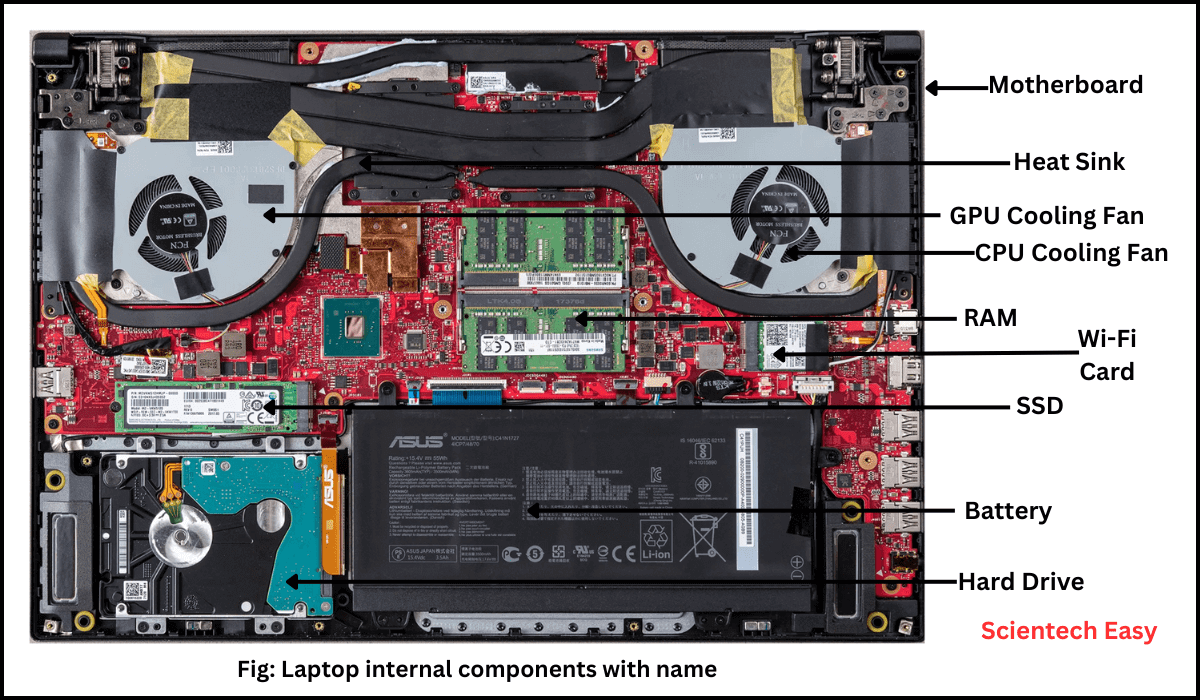
Your laptop’s fan isn’t just a noise generator—it’s a critical component in a sophisticated thermal management system. Unlike standalone appliances you can simply unplug, laptop cooling is deeply integrated with hardware protection mechanisms. Modern systems automatically override any attempted fan shutdown when temperatures reach critical levels, often triggering immediate shutdowns to prevent damage. This safety feature exists because silicon components begin suffering permanent damage around 100°C, well before you’d notice warning signs.
Manufacturer Design Prevents Complete Disabling
All major laptop manufacturers intentionally design systems to prevent complete fan disabling through standard user interfaces. If you’ve encountered websites claiming to show “how to turn fan off on laptop” using BIOS tricks or software hacks, these methods either don’t work on modern systems or only provide temporary reductions before thermal safeguards reactivate cooling. The absence of verified procedures in technical documentation isn’t an oversight—it’s a deliberate safety measure.
Legitimate Methods to Reduce Fan Noise Safely

Optimize Power Settings for Quieter Operation
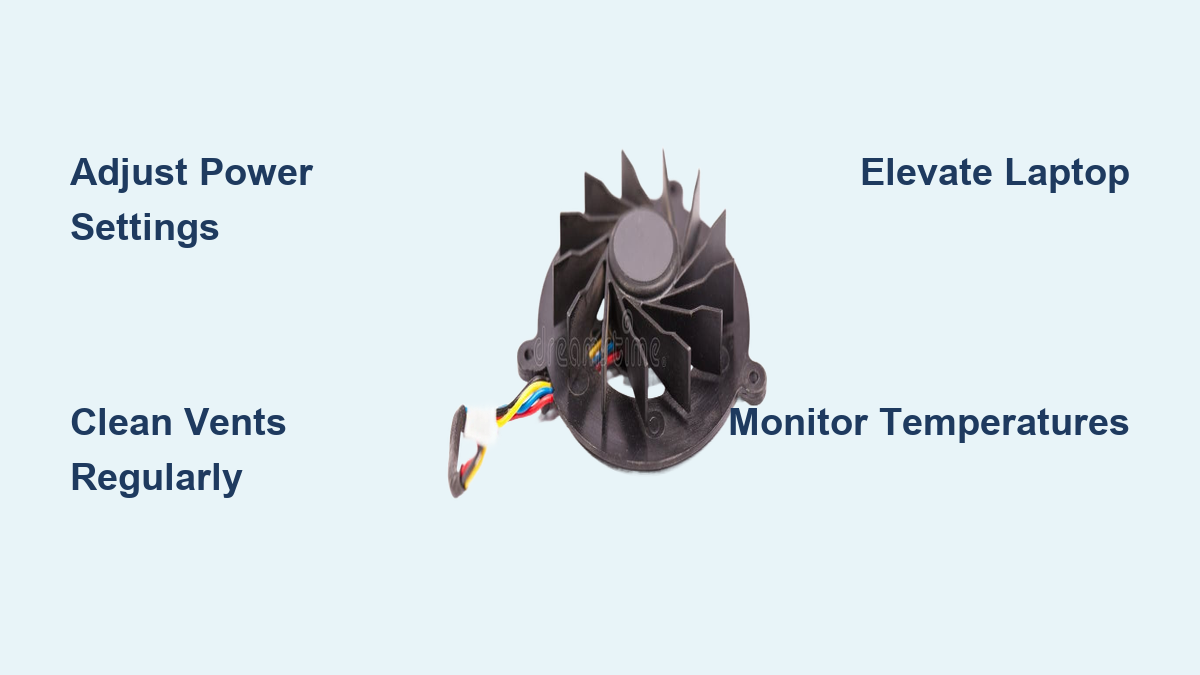
Adjusting your power profile creates immediate fan noise reduction without compromising safety. In Windows, navigate to Power Options and select “Power Saver” mode, which reduces CPU performance to generate less heat. On Macs, enable “Automatic Graphics Switching” in Energy Saver preferences to prevent unnecessary GPU activation. Linux users can employ TLP for optimized power management. These settings don’t turn off fans but allow them to operate at lower speeds during light tasks, often becoming inaudible.
Clean Vents and Maintain Airflow
Dust buildup is the most common cause of excessive fan noise. Power down your laptop completely, then use compressed air to clear vents and intake areas. Focus on both exhaust and intake vents—many users only clean the visible exhaust while neglecting intake areas where dust accumulation restricts airflow. This simple maintenance can reduce fan speeds by 20-30% as the cooling system operates more efficiently. Perform this cleaning every 3-6 months depending on your environment.
Elevate Your Laptop for Better Air Circulation
Place your laptop on a hard, flat surface rather than soft materials like beds or couches that block intake vents. Even a small elevation using a stand or book creates space for proper airflow beneath the chassis. This simple adjustment can lower operating temperatures by 5-10°C, allowing fans to spin more slowly. For intensive tasks, consider a passive cooling stand with no additional fans—just improved elevation and surface area.
Monitoring and Managing Temperature Responsibly
Track Temperatures Before Making Changes
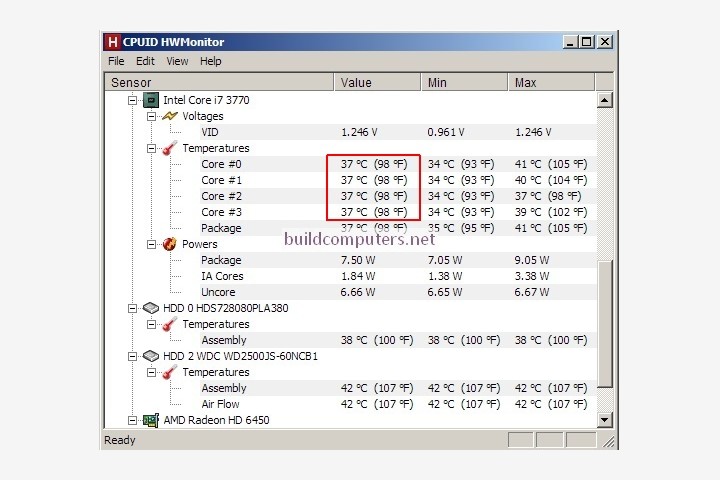
Before attempting any thermal management adjustments, monitor your baseline temperatures using reliable tools like HWMonitor (Windows) or iStat Menus (macOS). Check readings during different usage scenarios to understand your normal operating range. Idle temperatures should stay below 50°C, while moderate use might reach 65-75°C. If your laptop consistently exceeds 80°C during normal tasks, address the underlying heat issue rather than silencing the warning symptom.
Identify and Close Resource-Intensive Applications
Excessive fan activity often stems from unexpected background processes. Open your system monitor (Task Manager on Windows, Activity Monitor on Mac) to identify applications consuming disproportionate CPU resources. Browser tabs with autoplay videos, cryptocurrency miners disguised as legitimate software, and outdated applications frequently cause unnecessary heat generation. Closing these processes reduces thermal load immediately, allowing fans to slow down naturally.
Manufacturer-Specific Quiet Modes
Utilize Built-In Silent Profiles
Many modern laptops include manufacturer-designed quiet modes that legitimately reduce fan noise without compromising safety. Dell laptops often feature “Whisper Mode” in Dell Power Manager, ASUS systems include “Silent Mode” in Armoury Crate, and Lenovo Vantage offers “Battery Saver” profiles that throttle performance for quieter operation. These features don’t turn off fans but optimize them for minimal noise during appropriate usage scenarios—exactly what most users actually need.
Update BIOS and Firmware
Manufacturers frequently refine thermal management through firmware updates. Check your laptop maker’s support site for BIOS updates that might include improved fan curve algorithms. These updates often provide better temperature balancing, allowing fans to run slower during light usage while maintaining protection during intensive tasks. Never skip these updates when available, as they represent manufacturer-approved thermal optimizations.
When to Seek Professional Help
Recognizing Dangerous Overheating Signs
Shut down your laptop immediately if you notice any of these critical warning signs: sudden performance drops during normal tasks, keyboard areas becoming uncomfortably hot to touch, or the system automatically shutting down during use. These indicate your thermal management system is overwhelmed, and attempting to silence fans would be dangerously misguided. Persistent overheating often requires professional service to address dried thermal paste or blocked internal cooling channels.
Understanding Warranty Implications
Attempting to disable fans through unofficial methods typically voids your warranty. Manufacturers consider thermal management tampering a user-induced fault, leaving you responsible for any resulting damage. Before exploring any thermal modifications, consult your warranty documentation—most manufacturers explicitly state that cooling system interference isn’t covered.
Safe Alternatives for Quiet Computing
External Solutions for Noise Reduction
When absolute silence is required for recording or presentations, consider external solutions rather than compromising your laptop’s cooling. Noise-canceling headphones create personal quiet zones without thermal risks. For shared spaces, position your laptop farther away or use a small barrier to deflect sound. These approaches address the noise problem without creating hardware risks.
Schedule Intensive Tasks Strategically
Plan processor-heavy activities like video rendering or large downloads during times when fan noise won’t disturb you. Modern operating systems allow scheduling tasks during off-hours, letting your laptop work at full speed when noise matters less. This approach respects your hardware’s thermal needs while accommodating your quiet-time requirements.
Key Takeaway: The search for “how to turn fan off on laptop” reflects a common desire for quieter computing, but the real solution lies in legitimate thermal management—not disabling critical safety systems. By optimizing power settings, maintaining clean airflow, using manufacturer quiet modes, and monitoring temperatures responsibly, you can achieve significantly reduced fan noise while protecting your hardware investment. Remember that your laptop’s fan isn’t just making noise—it’s preventing costly damage. When in doubt, consult your manufacturer’s official support resources rather than attempting risky modifications that could transform a noisy problem into a silent, dead laptop.