How to Fix Chamberlain Garage Door Keypad Not Working
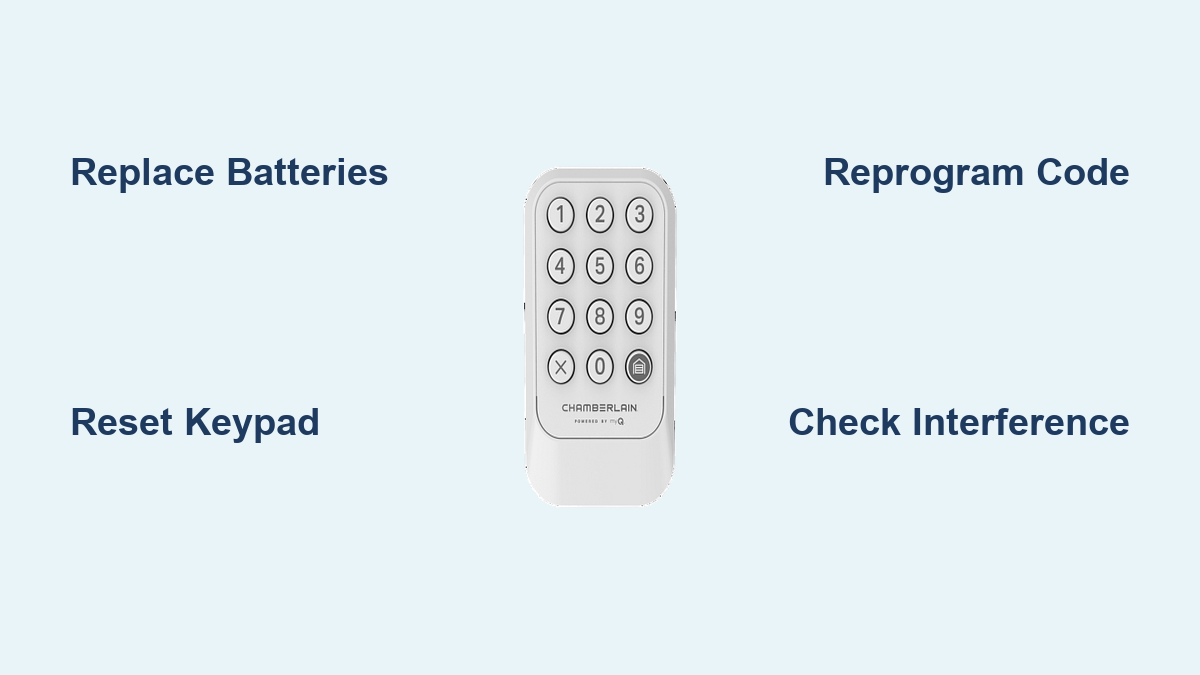
Your Chamberlain garage door keypad stopped responding right when you’re running late for work. The buttons feel normal, maybe even light up, but nothing happens when you enter your code. This frustrating scenario affects thousands of homeowners daily, and the good news—most keypad failures have simple solutions you can handle yourself in under 10 minutes.
This guide walks you through proven troubleshooting steps to restore your Chamberlain keypad functionality, from quick battery fixes to complete reprogramming procedures. You’ll learn how to diagnose the exact problem based on LED patterns and button responses, saving you the $75+ service call most homeowners unnecessarily schedule.
Immediate Diagnostic Checks That Save Time
Test Button Response Before Wasting Effort
Press any button on your Chamberlain keypad and observe carefully. No lights or sounds indicate a dead battery or complete power failure—skip to battery replacement immediately. Lights without door movement suggests the keypad communicates but lost its programming. Intermittent responses point to signal interference or weak battery power that needs attention before it fails completely.
Decode LED Indicator Patterns Like a Pro
Your keypad’s LED light provides critical diagnostic information if you know what to look for. Solid red typically means incorrect PIN entry—try your code again slowly. Rapid flashing often indicates programming mode—perfect timing to reprogram your code. No light confirms power issues requiring battery replacement. Slow blinking usually signals low battery warning before complete failure, giving you time to replace batteries before you’re locked out.
Verify Opener Power Status First
Your garage door opener itself might be causing the keypad problem. Check if the motor unit has power by looking for LED lights on the opener housing. Test your wall button or remote to confirm the opener responds to other commands—this eliminates the opener as the source of the problem. If the opener doesn’t respond to any control method, you’re dealing with a power or motor issue rather than a keypad problem.
Battery Replacement That Actually Works

Identify Your Exact Battery Type
Most Chamberlain keypads use 3V lithium CR2032 batteries or 9V alkaline batteries, but installing the wrong type causes repeated failures. Check your model number on the keypad back or inside the battery compartment before purchasing replacements. CR2032 models typically last 2-3 years with normal use, while 9V systems need replacement annually—mark your calendar to avoid getting locked out.
Follow Proper Battery Replacement Protocol
- Open the keypad cover fully using your fingernail or plastic tool to avoid damaging the housing
- Document the battery orientation by taking a photo with your phone before removal
- Remove old battery using a small flathead screwdriver if contacts are corroded
- Clean contact points thoroughly with rubbing alcohol and cotton swab to ensure conductivity
- Install new battery matching the + and – symbols exactly—reversed installation damages circuitry
Post-Replacement Testing That Prevents Repeat Issues
After installing fresh batteries, wait 30 seconds before testing to allow the system to reset. Press any button—immediate LED response confirms power restoration. If the keypad still doesn’t work after battery replacement, don’t panic—proceed to reset procedures as the programming likely cleared during the battery change.
Complete Reset Procedures for Stubborn Keypads
Factory Reset Method That Works 90% of the Time
Press and hold the * and # keys simultaneously for 10 seconds until the LED turns off completely. Release both buttons, then press and release the # key. The LED should flash rapidly—this indicates factory reset complete and ready for reprogramming. This simple procedure fixes most programming glitches without requiring complete reprogramming.
Clear All Existing Codes Properly
Some Chamberlain models require individual code clearing before new programming takes effect:
1. Enter current PIN then press and hold the # key
2. Wait for LED to flash three times confirming code deletion
3. Release # key and immediately press and release it again
4. Test with old PIN—it should no longer work before proceeding to new programming
Master Reset for Completely Unresponsive Units
For keypads refusing standard reset procedures:
1. Remove battery for 60 seconds to fully discharge residual power
2. Press every button once with battery removed to clear memory
3. Reinstall battery and wait for LED response before proceeding
4. Perform factory reset sequence as outlined above before attempting reprogramming
Reprogramming Your Keypad Successfully
Standard Programming Steps That Stick
- Press and release the “Learn” button on your garage door opener motor unit (small red or purple button)
- LED on opener will glow steadily—you have exactly 30 seconds to complete programming
- Enter your desired 4-digit PIN on the keypad carefully
- Press and hold the # key until the opener light blinks twice
- Release # key—programming complete; test immediately with your new code
Alternative Programming Method for Newer Models
Some newer Chamberlain models use different button sequences that confuse homeowners:
1. Press and release Learn button on opener
2. Within 30 seconds, press and hold the * key on keypad
3. Enter your 4-digit PIN while holding *
4. Release * key when opener light flashes rapidly
5. Test new PIN immediately before the 30-second window closes
Multiple PIN Setup for Household Convenience
Most Chamberlain keypads accept temporary codes for guests or service personnel:
1. Program master PIN using standard method first
2. Enter master PIN then press and hold the 0 key
3. Enter temporary 4-digit code within 10 seconds
4. Press and release 0 to save temporary PIN
5. Temporary code expires after programmed number of uses, typically 1-5 entries
Signal Interference Solutions You Can Implement Today

Identify Common Hidden Interference Sources
LED bulbs in garage door openers frequently cause keypad signal interference that homeowners overlook. WiFi routers positioned within 3 feet of the opener disrupt communication. Baby monitors and security cameras operating on 2.4GHz frequency interfere with Chamberlain’s wireless signal—check device manuals for operating frequencies.
Quick Interference Test That Pinpoints the Problem
- Turn off LED garage lights temporarily to test if they’re causing interference
- Unplug nearby electronics one at a time while testing keypad response
- Test keypad range from different distances—reduced range indicates interference
- Move WiFi router at least 3 feet from opener to eliminate signal conflict
- Replace problematic LED bulbs with incandescent or high-quality LEDs designed for garage use
Weather-Related Fixes for Year-Round Reliability
Cold Weather Solutions That Prevent Winter Failures
Battery performance drops 50% in temperatures below 32°F, causing mysterious keypad failures. Bring keypad indoors overnight during extreme cold snaps. Switch to lithium batteries which maintain power in cold weather better than alkaline. Install a weather shield over the keypad to reduce exposure while maintaining accessibility.
Moisture Prevention That Extends Keypad Life
Seal keypad edges with clear silicone caulk if you notice fogging inside the housing. Check battery compartment for white corrosion—clean with vinegar and cotton swab before installing new battery. Replace cracked keypad housing immediately to prevent water damage that destroys circuitry. Position keypad under eave overhang for natural protection from direct rain exposure.
When to Replace Your Chamberlain Keypad
Clear Replacement Indicators That Save Money
Physical damage like cracked buttons or housing requires immediate replacement—don’t waste time troubleshooting. Repeated programming failures after following all steps suggests internal circuit failure beyond repair. Inconsistent operation even with fresh batteries indicates end of keypad life—replace before you get locked out.
Cost-Effective Replacement Strategy
New Chamberlain keypads cost $25-45 retail at home improvement stores. Professional service calls average $75-150 for what’s usually a simple replacement. DIY battery replacement costs $3-8 but only works if the keypad electronics are sound. Programming issues resolved at home save $100+ service fees—attempt all troubleshooting before replacement.
Proactive Maintenance That Prevents Future Failures
Monthly Inspection Routine That Catches Problems Early
Test keypad weekly by entering your PIN to verify functionality. Check battery voltage quarterly with multimeter—replace at 2.5V for CR2032 or 7.5V for 9V batteries. Clean button surfaces monthly with slightly damp cloth to prevent grime buildup. Verify LED response speed—slow response warns of failing battery before complete failure.
Seasonal Preparation That Ensures Year-Round Operation
Replace batteries every fall before cold weather reduces performance. Apply dielectric grease to battery contacts annually to prevent corrosion. Check mounting hardware for loosening due to vibration and tighten as needed. Update PIN yearly for security and to verify programming remains intact.
Your Chamberlain garage door keypad should now respond reliably to your commands. Start with battery replacement for quick wins, then progress through reset and reprogramming steps for persistent issues. Most keypads restored through these methods provide years of additional service, saving you the cost and hassle of complete replacement. When troubleshooting fails, replacement remains a simple DIY project that takes less than 15 minutes with basic tools.